

What Your Pool Water Numbers Actually Mean
A clean-looking pool is not the same as a safe pool. The water can sparkle and still sit outside the range that keeps swimmers comfortable and the surface free of pathogens. The only way to know where you stand is to measure. Once you understand what each number tells you, the rest of pool maintenance becomes a lot less guesswork.
Here is what the ADC Water Laboratory looks for, and what each parameter means in practice.
pH
pH measures how acidic or alkaline the water is. The healthy range for a swimming pool sits between 7.2 and 7.6. Below that, the water turns aggressive, irritating eyes and skin and slowly damaging tiles, grout and metal fittings. Above it, chlorine loses much of its disinfecting power and the water starts to look cloudy. If your pH is off, nothing else in the pool chemistry will behave the way it should.
Free Chlorine
Free chlorine is the active disinfectant in the water, the portion still available to neutralise bacteria and other contaminants. Total chlorine includes chlorine that has already done its job and is no longer effective. The number that matters for safety is free chlorine. A strong chlorine smell is often a sign that free chlorine is low and combined chlorine is high, the opposite of what most people assume.
Total Alkalinity
Total alkalinity acts as a buffer for pH. When alkalinity is in range, pH stays stable. When it drifts, pH starts swinging with every rainfall, every dose of chemicals and every busy weekend. Treat alkalinity as the foundation. Get it right first, and pH becomes much easier to hold.
Calcium Hardness
Soft water pulls calcium from plaster, grout and concrete. Hard water leaves scale on tiles, ladders and the waterline. Total hardness, calculated from calcium and magnesium, tells you which direction your pool is heading and what to adjust before damage shows up.
Cyanuric Acid, Conductivity and TDS
Cyanuric acid protects chlorine from breaking down in sunlight, important for outdoor pools on Curaçao. Too little and your chlorine burns off by midday. Too much and chlorine becomes sluggish even at correct levels. Conductivity and total dissolved solids (TDS) reflect everything that has built up in the water over time, from minerals to swimmer residue. Rising numbers point to water that needs partial replacement.
The Microbiological Side
Chemistry tells you whether the conditions are right for disinfection. Microbiology tells you whether disinfection is actually working. The ADC Water Laboratory tests pool water for total colony count, E. coli, coliforms, enterococci and Pseudomonas aeruginosa. Pseudomonas is the one that causes the skin and ear infections most often associated with poorly maintained pools. Even a chemically balanced pool can carry a microbiological problem, particularly after heavy use or a system fault. Periodic microbiological testing closes that gap.
For Homeowners
Test your chemistry weekly during regular use. Send a sample to the laboratory for microbiological testing once or twice a year, and any time something changes, cloudy water that will not clear, a skin or ear complaint after swimming, or a pump or filter issue you have just resolved.
For Hotels, Villas, Dive Shops and Other Operators
Your testing schedule has guests, liability and reputation attached to it. A documented microbiological testing routine, alongside daily chemistry checks, is the cleanest defence you have when something goes wrong. It also gives you data to share with guests and insurers when they ask. The ADC Water Laboratory works with hospitality operators on testing schedules that fit your occupancy patterns and your risk profile.
How to Test With ADC
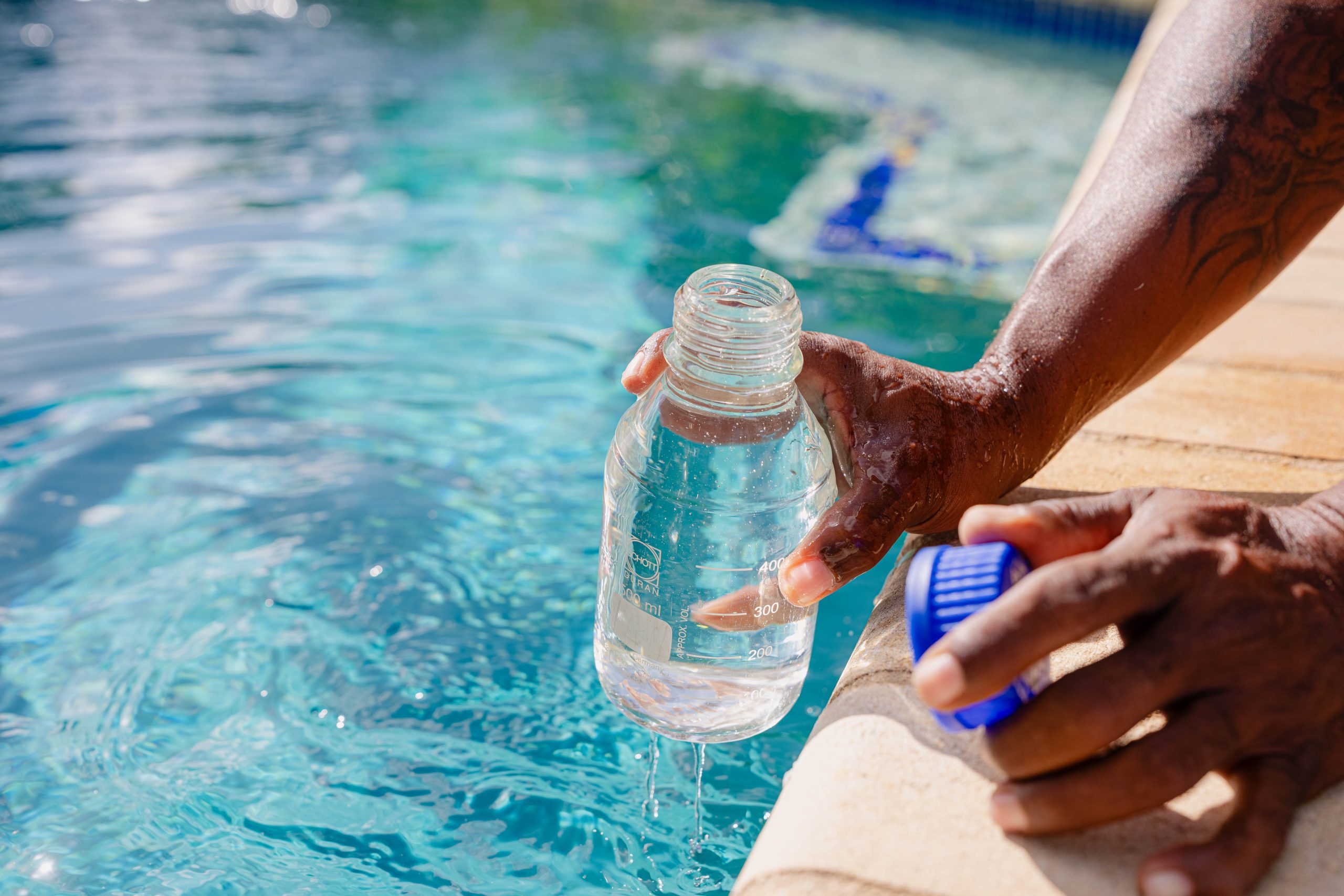
The ADC Water Laboratory analyses pool water for the full chemical and microbiological profile described above, with additional analyses available on request. We supply dedicated bottles for safe sample transport and our specialists are on hand each weekday to advise on what to test and why.
Get in Touch
If your readings have drifted, your pool has had a heavy week, or you simply want a baseline you can trust, get in touch. Together we decide what to test, and you get a clear answer to act on.